Newsletter Subscribe
Enter your email address below and subscribe to our newsletter

The use of AI in manufacturing QA analyzes sensor data, vision systems, and statistical process controls to inspect every unit in real time. It enables rapid defect detection, centralized analytics, and traceable governance. Cross-functional teams must align on data, models, and change management to sustain transparency and corrective actions across suppliers. The potential for ROI—reduced waste, higher yield, faster throughput—depends on disciplined integration and ongoing performance monitoring, leaving a critical question about how to scale responsibly and consistently.
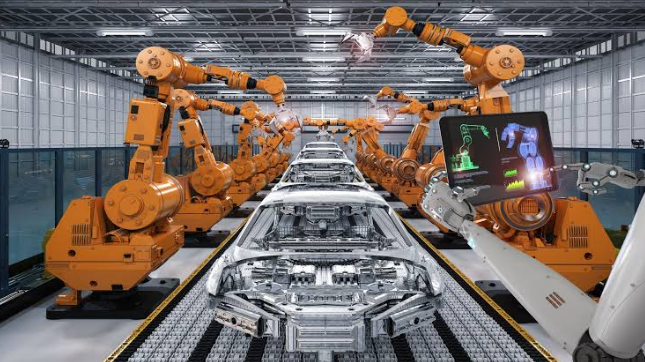
AI-powered quality checks on the production line systematically inspect every unit by integrating sensor data, computer vision, and statistical process control. The approach monitors dimensional accuracy, surface integrity, and assembly conformity, enabling real-time defect detection. Data from multiple sources feeds centralized analytics, guiding corrective actions and documenting performance trends. This structured rigor supports variance reduction and cross-functional accountability across manufacturing teams.
See also: techandkey
Data governance and model governance frameworks are essential to ensure traceability, compliance, and continuous improvement across cross-functional teams, suppliers, and production environments, preserving operational freedom while managing risk.
Implementing AI QA hinges on three interdependent pillars: data readiness, system integration, and organizational change. The discussion emphasizes data governance, data integration, and model explainability as core enablers for reliable predictions. Change management coordinates cross-functional teams, governance policies, and training to sustain adoption. Clear metrics, documented interfaces, and traceable workflows ensure transparency, accountability, and agile responses to quality variances across manufacturing operations.
How does AI-driven quality assurance translate into measurable value across manufacturing operations, and what constitutes a robust framework for monitoring that value? The analysis emphasizes ROI drivers, real-time metrics, and standardized dashboards. It quantifies quality lift, waste reduction, and throughput gains while tracking risk mitigation, anomaly alerts, and process capability. Continuous improvement emerges through iterative experimentation, cross-functional reviews, and disciplined data governance.
AI QA variant management enables adaptive models through continuous retraining and feature reweighting; data drift handling detects shifts, triggers revalidation, and coordinates cross-functional teams to deploy validated updates for evolving product variants.
Data privacy concerns in AI QA include data minimization, anonymization, access controls, and auditability. The approach favors cross-functional governance, rigorous risk assessment, and transparent data handling to empower teams while preserving stakeholder freedom and system integrity.
Autonomous QA can operate without continuous human oversight, but optimal reliability emerges when a human in the loop supervises critical decisions, ensuring risk management, traceability, and alignment with cross-functional metrics and freedom-prioritized quality objectives.
A hypothetical case shows a biweekly budget forecast balancing model maintenance costs with ROI signals. Budget forecasting and maintenance budgeting require cross-functional input, data-driven baselines, and clear stewardship, enabling adaptable AI QA programs while preserving freedom and accountability.
Auditors require statistical literacy, model governance expertise, data provenance skills, and domain knowledge to audit ai qa results; they assess audit accuracy, establish governance controls, validate data lineage, and ensure cross-functional collaboration for transparent, freedom-oriented decision-making.
In the plant, AI-driven QA operates like a seasoned conductor, orchestrating sensor data, vision feeds, and SPC notes into a harmonized chorus of defect-free output. The system’s traceable governance keeps tempo, while explainability lights the why behind each decision. Cross-functional teams translate insights into tangible actions, recording performance trends and corrective steps across suppliers. The result is a data-driven pulse: reduced waste, steadier yield, faster throughput, and a transparent, measurable path to continuous quality improvement.